The Edge of the World: Traversing the Southern Ice Field of Patagonia
Text by Marcus Ray
•Photography by 111111 Studio
•September 18, 2024
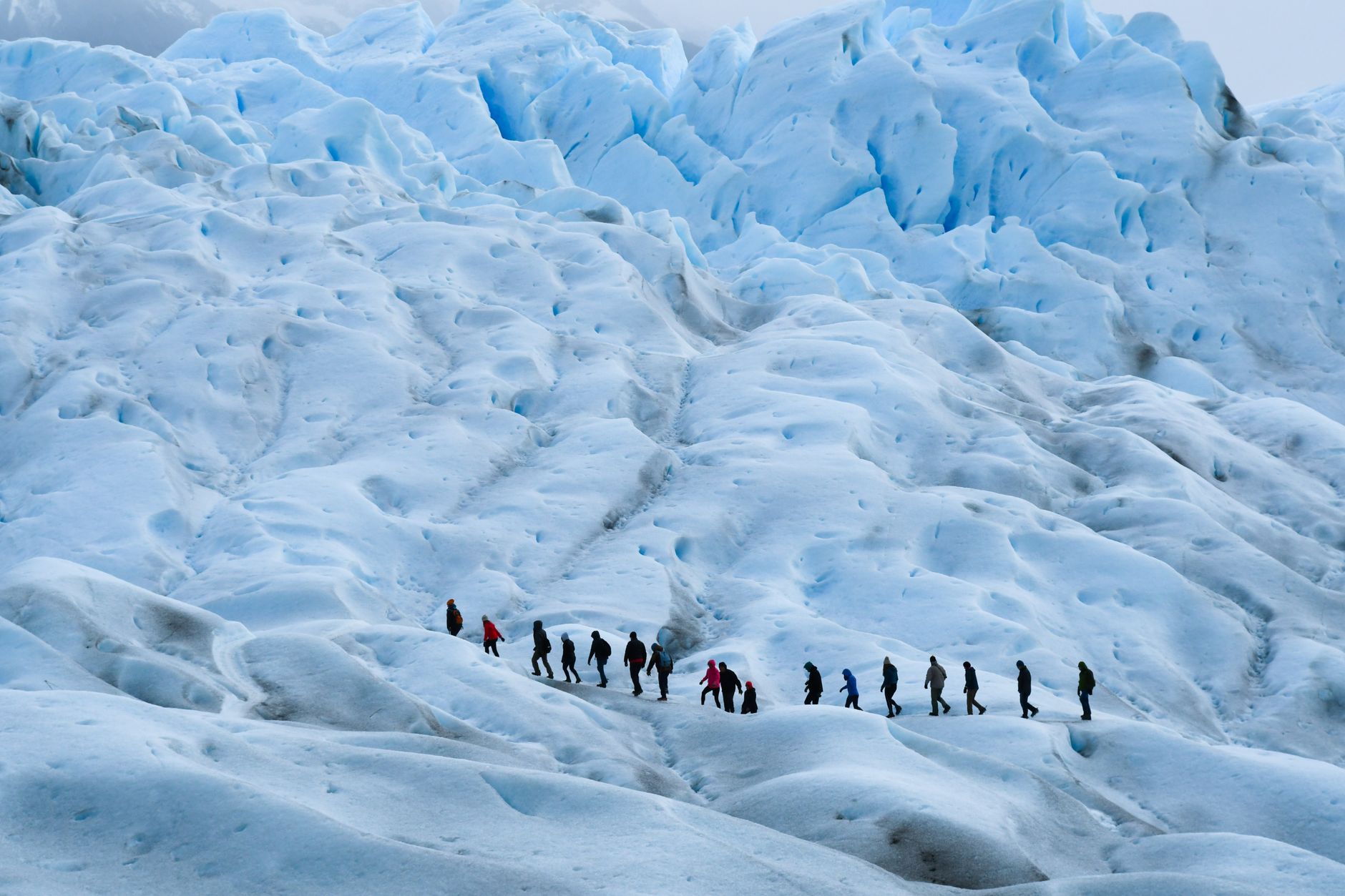
Deep serac formations at the terminus of Grey Glacier under low storm clouds.
The Southern Patagonian Ice Field is the third-largest contiguous sheet of continental ice on Earth, surpassed only by Antarctica and Greenland. Spanning over 13,000 square kilometers across the spine of the Andes, it is a realm of blue crevasses, relentless westerly gales, and total detachment from modern noise.
Setting foot upon its icy surface requires equal parts mountaineering competence and mental surrender to an environment entirely indifferent to human comfort.
The Anatomy of Katabatic Wind
Anyone who has trekked around Torres del Paine or Los Glaciares knows the wind. It does not merely blow; it descends from the ice cap like a physical mass, flattening tussock grass and whipping spray from turquoise glacial lakes.
Under such conditions, gear choices cease to be aesthetic preferences and become safety essentials. A four-season geodesic shelter, robust crampons, and layered merino wool are the currency of survival.
Minimalist Travel in High Latitudes
Traversing these remote passes demands that every ounce carried in a backpack justify its place. We found that the greatest luxury on the ice field was simplicity: hot broth boiled from glacial meltwater, a dry pair of wool socks at dusk, and total silence once the wind finally died at midnight beneath the Southern Cross.
As glaciers worldwide retreat, observing their grandeur up close reinforces our duty to travel conscientiously, avoiding wasteful single-use gear and supporting park conservation efforts.
Expedition Checklist
- Season: November through March offers extended daylight, though storms can strike any week.
- Guides: Do not attempt glacial traverses without certified IFMGA/UIAGM mountain guides.
- Leave No Trace: All human waste and packaging must be packed out from high camp zones.